
Campaigns That Changed the Choices Facing Europe
European military history is often remembered through a handful of battle names, but the larger campaigns explain how those encounters changed political possibilities. Waterloo belongs to the contest over Napoleon’s return to power. The Somme belongs to a coalition fighting an industrial war. Normandy belongs to a multinational effort to defeat Nazi Germany across several fronts. Each setting gave military action a different meaning, and each required far more than a talented commander or a powerful weapon. This guide compares major European campaigns through the relationship between political aims, supporting resources, coalition decisions, and the people affected by fighting. The examples are selected to show changes in warfare and its consequences rather than to rank the suffering or importance of particular countries. Following the connections between events makes the familiar names more informative and prevents a battlefield result from standing in for the whole history.
Read the Campaign Before Judging the Battle
A campaign links military activities across a period and geographical area toward an objective. Its story includes mobilization, movement, supply, fighting, and the decisions that connect those activities. A battle can be decisive within that story without explaining every later consequence. To understand why an encounter mattered, identify the political problem its leaders hoped to solve, the other forces operating at the same time, and what choices remained afterward. This approach also makes comparisons more precise: a campaign seeking to restore a ruler cannot be judged as though it had the same purpose as a coalition campaign to defeat an expansionist regime. Different objectives require different evidence of success, and the distance between military results and political settlement remains an essential part of the explanation.
Russia in 1812: Reaching Moscow Did Not Produce Submission
Napoleon invaded Russia in June 1812 with a multinational army. His forces advanced through a campaign of fighting and mounting losses before entering Moscow. Occupying that famous destination did not produce the political settlement he sought. The Russian government did not end the war simply because French troops had reached the city.
The distinction between a destination and a result is central to the campaign. An army can occupy a place while its own condition deteriorates. Supplies, transport animals, health, and the ability to replace losses affect what it can do next. The Fitzwilliam Museum’s account of the campaign describes losses during the advance as well as the catastrophe of retreat. Winter intensified the disaster; it did not begin every problem.
The campaign therefore exposes a limit of territorial measurement. A line drawn to Moscow records distance traveled, while a strength return records the condition of the people who traveled it. A political history asks whether the occupation compelled the desired decision. Reading those three kinds of evidence together explains why an apparently impressive advance could end in strategic failure.
Waterloo in 1815: A Defeated Ally Returned to the Campaign
Napoleon’s return from exile brought renewed war in 1815. On June 16, French forces fought Wellington’s army at Quatre Bras while Napoleon defeated Blücher’s Prussians at Ligny. The Prussian defeat did not remove that army from the campaign. Its continued ability to cooperate with Wellington became central to the fighting at Waterloo two days later.
On June 18, Wellington’s multinational force held its position while Prussian forces joined the battle against Napoleon. That sequence changes the familiar picture of one British commander winning alone. It also makes Ligny important: the question is not merely who won there, but what the defeated army could still do afterward. Coalition resilience included retaining a useful relationship after a reverse. The National Army Museum and Royal Armouries both place Waterloo within this connected sequence.
Industrial War Expanded the Meaning of Military Power
By the First World War, major European campaigns depended on organizations capable of sustaining industrial warfare over long periods. Factories, railways, public finance, medical systems, and labor became deeply connected with the fortunes of armies. Front-line events remained important, but their scale and duration depended on support stretching far behind the fighting. This changed how a campaign’s strength and costs should be understood. The availability of weapons was only one measure; production, replacement, transport, training, and the capacity of societies to continue bearing demands all mattered. A comparison with earlier warfare should identify these changes without imagining that nineteenth-century armies had no logistical needs or that twentieth-century technology made political judgment irrelevant.
The Somme in 1916: One Offensive, Several Purposes and Phases
The Somme offensive began on July 1, 1916, with British and French participation and continued until November. Its opening day brought catastrophic British losses, but that day did not contain the whole campaign. Pressure on the French at Verdun affected the wider Allied situation. The Somme has to be placed within that relationship rather than judged as though the armies were fighting in isolation.
The fighting also included changes in equipment and practice. On September 15, British forces used tanks in action for the first time at Flers-Courcelette. The Canadian official history describes the anticipated contribution of tanks alongside artillery support. This was an attempt to solve a battlefield problem through a combination of capabilities, rather than a new machine independently ending the war.
The tanks’ limitations are part of the same history. The National Army Museum records breakdowns and difficulty moving across the battlefield. A first appearance and a mature capability are different milestones. The campaign’s significance includes the scale of human loss, its place in alliance strategy, and attempts to change how attacks worked. Recognizing one does not cancel the others.
The Second World War Was Fought Across Interacting Fronts
Campaigns against Nazi Germany in western, southern, and eastern Europe influenced one another through the distribution of forces, resources, and political attention. A history centered on one national army can obscure this interaction. The Soviet Union’s war against Germany, the western Allied campaigns, resistance, and the wider industrial and maritime effort belong within an account of Germany’s defeat.
These connections do not make every front equivalent. Scale, terrain, occupation policies, military institutions, and civilian experience differed substantially. Nazi persecution and mass murder also formed an essential part of the war’s historical reality. An explanation that treats campaigns only as contests between machines misses why the conflict’s political character and the experiences of occupied societies are central to understanding its outcome.
Normandy in 1944: The Landing Needed a Working Bridgehead
On June 6, 1944, Allied forces landed in Normandy. American, British, and Canadian troops formed the principal seaborne assault forces, supported by a much wider multinational effort. Getting ashore opened the campaign. Establishing enough capacity to keep people, equipment, and supplies arriving was another problem, especially while the enemy continued resisting the bridgehead.
The fighting lasted through weeks in which geographical progress often looked slow. The American Battle Monuments Commission’s campaign account follows the struggle for Cherbourg and the difficult breakout. A port’s capture could improve future supply possibilities, but the armies still had to fight, organize, and move what they needed. The coastline was an entry to a campaign, not a finished supply system.
Operation Cobra began on July 25 after weather-related delays. The American breakout changed the possibilities for movement beyond the Normandy position. It also increased the distance over which supplies would have to follow. This is the campaign’s practical sequence: land, sustain and enlarge the position, break out, and support the advance. Remembering only D-Day removes most of the work connecting the invasion with the later liberation of territory.
Victory in 1945 Created Responsibilities as Well as Relief
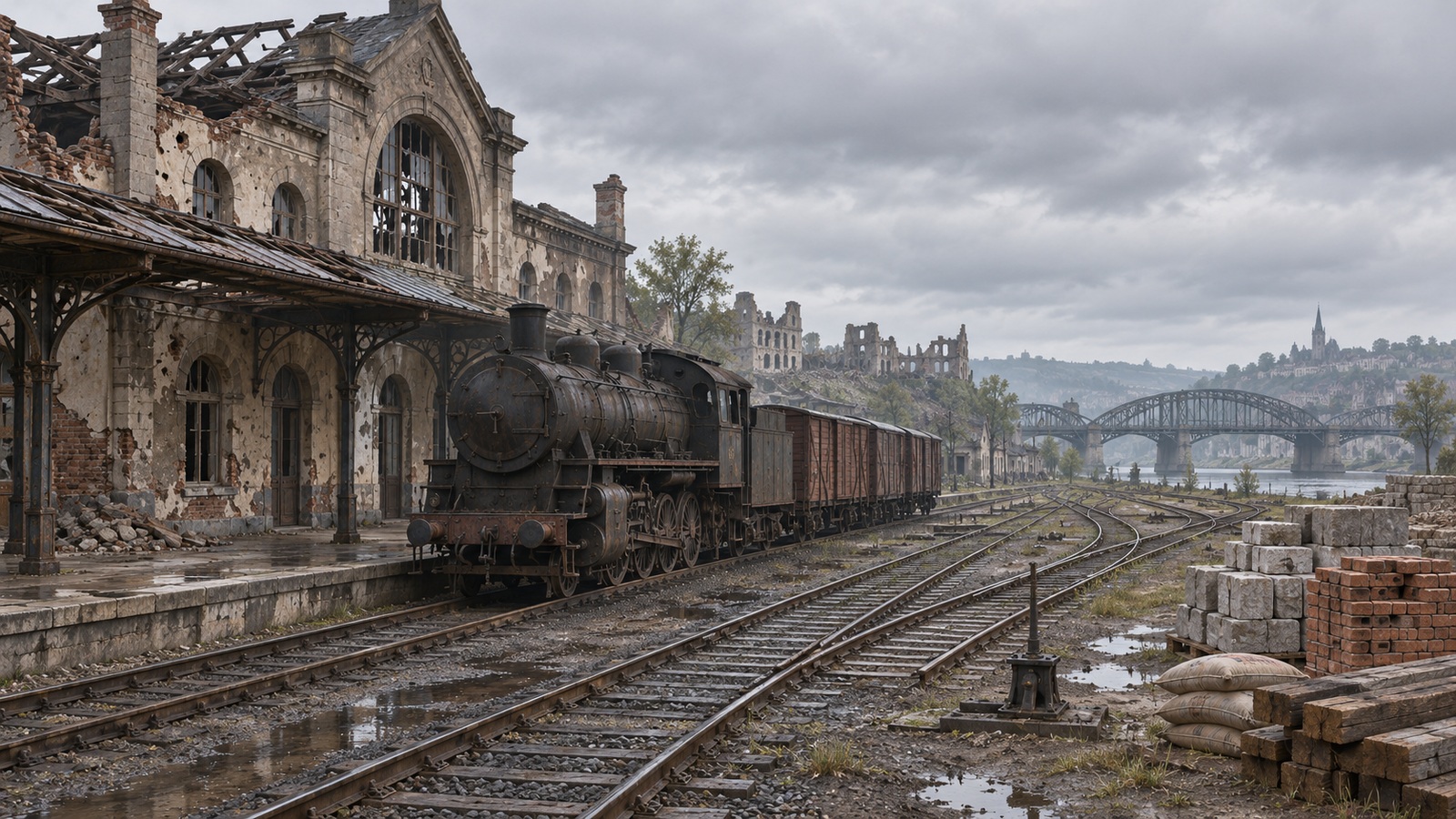
Germany’s defeat ended Nazi rule and the war in Europe, but it did not immediately restore normal life. Occupation, the care of displaced people, the recovery of institutions, and the consequences of destruction demanded continuing decisions. A military chronology ending at surrender leaves those responsibilities outside the frame. Following the aftermath reveals how campaign outcomes connected with political arrangements and public recovery. It also explains why liberation, victory, survival, and return could mean different things to different people. These distinctions should remain visible even in an introductory article because they prevent the ending of organized fighting from being mistaken for the completion of every task created by the war.
Compare What Distance Required in Each Campaign
In 1812, an advance deep into Russia enlarged the separation between Napoleon’s army and its supporting arrangements. In 1815, the separation and subsequent cooperation of two Allied armies affected Napoleon’s immediate choices. In Normandy, access from sea to land and the movement out of a bridgehead created another set of constraints. All involved geography, but the relevant relationship was different.
This makes “distance mattered” an incomplete explanation. Distance between which places, for which people or supplies, and over what period? The answer connects a map with an actual task. A campaign comparison becomes useful when it specifies how a location or route altered available choices. The point is to explain the mechanism rather than make the landscape responsible for every decision taken within it.
Public Memory Selects Some Experiences Over Others
Campaigns survive in museums, school curricula, family stories, monuments, films, and national commemorations. These forms of memory preserve important experiences, but they select and organize them differently. A widely remembered battle may stand in for a campaign involving many less familiar places. That can make an introduction accessible while also narrowing the public understanding of what happened.
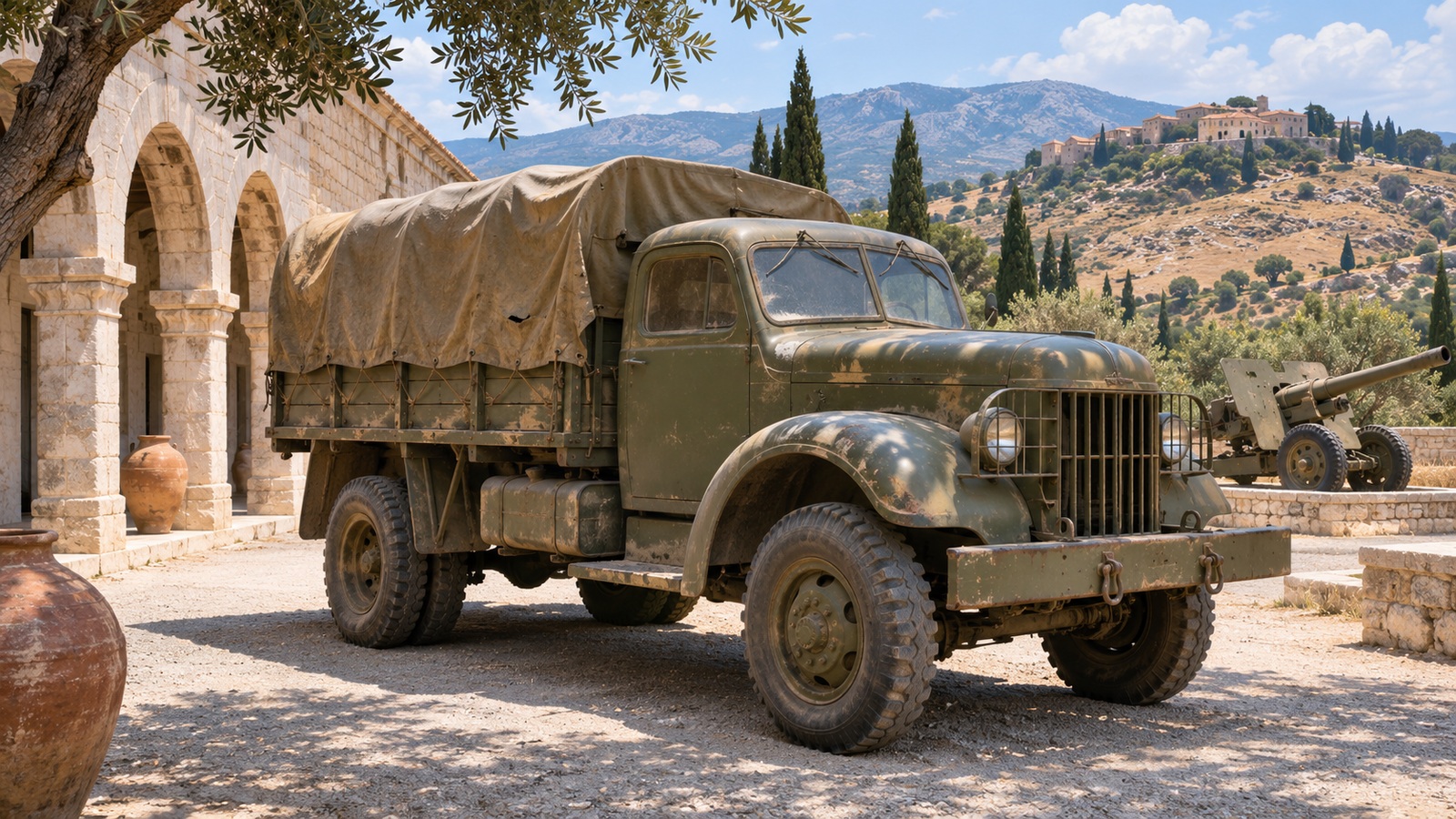
Material objects offer another perspective. A uniform, transport vehicle, diary, or medical instrument can reveal work and experience absent from a commander’s biography. Such objects need provenance and context rather than being treated as self-explanatory evidence. Asking who used an object, where it traveled, and how it entered a collection can connect a large campaign with an individual’s life.
International comparison broadens the picture further. The same campaign may appear as liberation, national catastrophe, imperial service, resistance, or the beginning of another difficult political period in different accounts. Historians must examine the evidence behind those perspectives without assuming that one national memory exhausts the subject. The variety is part of the campaign’s impact, not an obstacle to describing it clearly.
Compare Political Aims, Resources, and Lasting Change
A useful comparison of European campaigns begins with their purposes and then follows the organizations required to pursue them. It connects military action with coalitions, supply, social demands, civilian consequences, and the aftermath. This avoids judging every campaign by the fame of its commander, the size of one battle, or the farthest point marked on a map.
The lasting value of these histories comes from understanding relationships rather than extracting a universal formula for victory. Russia in 1812, Waterloo, the Somme, and Normandy each illuminate different constraints on the use of force. Their differences are as instructive as their similarities. Reading them in that way turns major campaign names into an informed account of how warfare helped reshape Europe’s political possibilities and its societies.
Four Campaigns, Four Questions to Carry Forward
Russia asks whether territorial occupation produced the intended political response. Waterloo asks whether armies could continue cooperating after one suffered defeat. The Somme asks how alliance needs, industrial force, adaptation, and human cost interacted. Normandy asks how an invasion became a supported campaign and then a moving front. Those questions preserve the cases’ differences.
A chronology helps test a proposed explanation. Ligny precedes Waterloo, so the Prussian army’s survival and later action belong inside the explanation of June 18. Flers-Courcelette occurs well after the Somme’s opening, so it cannot explain the conditions of July 1. Cobra belongs to late July, after the June landings had already required weeks of sustained fighting. Ordering events prevents later developments from being projected backward.
These campaigns helped reshape Europe through more than the immediate outcome of battle. They changed the choices of governments, the demands placed on societies, and the responsibilities left after fighting. A substantial introductory history connects those effects with identifiable events and institutions. It treats the people who supplied, fought, endured, and rebuilt as part of the explanation, while allowing each campaign to reveal a different limit or possibility of military power.