How the War Against Japan Became a Global Campaign
The Pacific War is often introduced through Pearl Harbor, Midway, and a succession of island battles ending in Japan’s surrender. Those events form an important sequence, but they belong within a wider war involving China, Southeast Asia, Australia, the Pacific islands, and societies drawn into fighting or occupation. Understanding the theater requires following how Japan’s early expansion changed the military problem, how the Allies developed and sustained several counteroffensives, and how the costs of war shaped the world that followed. Naval battles mattered alongside ground campaigns, industrial production, intelligence, transport, and the experiences of civilians and prisoners. This explainer follows the strategic changes from expansion to defeat while avoiding a single-battle explanation for the outcome. It also distinguishes the military ending in 1945 from the postwar political transformations that continued across Asia and the Pacific.
The Asian War Preceded Pearl Harbor
Japan’s war in China was already extensive before the December 1941 attacks brought the United States directly into the wider conflict. The fighting that expanded in 1937 involved Chinese armies, occupied communities, and political struggles that would continue to shape the region. Beginning the entire Asian story at Pearl Harbor can therefore conceal years of war and the scale of China’s experience.
The mainland war continued alongside the oceanic campaigns. This wider frame explains why Japanese military commitments were not limited to the forces confronting the American-led advances across island chains. The war had several geographical centers and several histories of participation.
December 1941 Expanded the Conflict Dramatically
The attack on Pearl Harbor on December 7, 1941, Hawaii time, struck American forces and helped bring the United States into the war against Japan. It accompanied a broader Japanese offensive against territories and interests across Asia and the Pacific. The Naval History and Heritage Command’s Pearl Harbor collection provides material about the attack and its consequences. The immediate military damage was substantial, but the longer strategic outcome depended on events far beyond that morning. American mobilization, repair, shipbuilding, training, and decisions about global priorities became central to the struggle that followed. Pearl Harbor was a major rupture in the war’s political and military setting, not a complete explanation of every later Allied choice.
Early Conquests Created an Expanding Japanese Burden
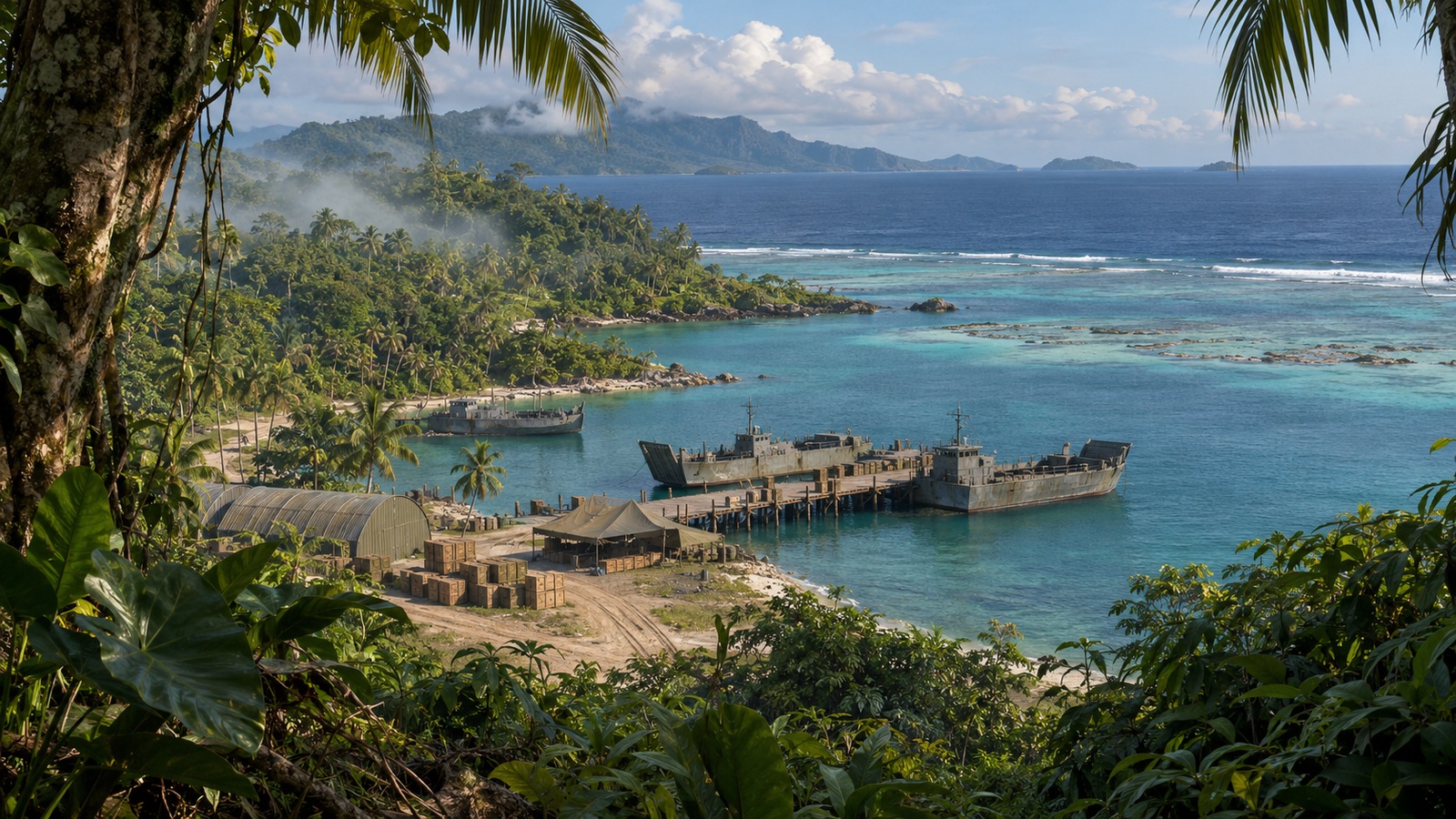
Japanese advances brought large areas under occupation and created a defensive perimeter spread across great distances. Those gains offered resources and positions, but also required transport, garrisons, administration, and the maintenance of connections. Holding a wide region imposed obligations that continued after the initial campaign’s visible successes. The practical burden changed as opponents recovered and began contesting those connections.
Occupation also had profound consequences for the people living within the conquered areas. Coercion, deprivation, violence, forced labor, and the treatment of prisoners belong within the history rather than appearing only after a list of battles. Political claims about liberation from European empire must be examined alongside the actual conduct of Japanese rule. The experience differed by place, but it cannot be inferred from the language of military announcements.
For strategic analysis, the central issue is the relationship between expansion and sustainable control. A state can gain territory faster than it can establish a dependable system for holding and using it. The Pacific War offers a particularly large example of that problem. Its outcome still required sustained Allied action, however, rather than following automatically from the size of Japan’s perimeter.
Midway Removed Four Japanese Fleet Carriers
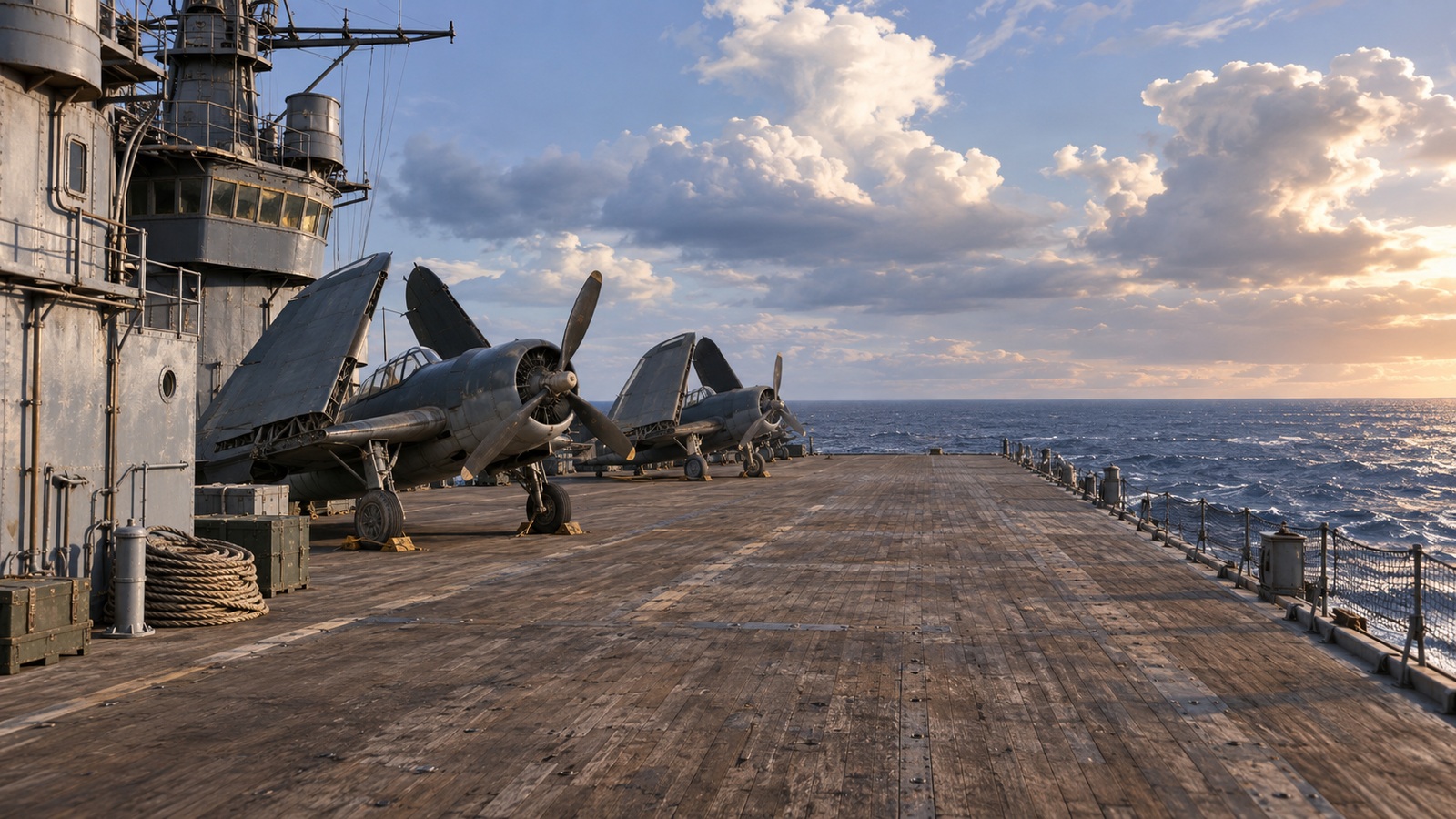
At Midway in June 1942, Japan lost Akagi, Kaga, Soryu and Hiryu, removing four carriers and a major element of its naval striking capacity. The United States also lost Yorktown, so the result should not be remembered as a victory without cost. Intelligence helped the Americans prepare, while the battle still required crews, aircraft, ships and decisions made during combat. The U.S. Pacific Fleet’s contemporary report records the event from the American command perspective, whose conclusions belong beside the subsequent campaign history. Midway frustrated Japan’s operation and changed what was possible, but Japan still held extensive territory and substantial forces; the Allies had to convert that opportunity into a sustainable offensive rather than assume the carrier losses explained every later objective and its cost.
Guadalcanal Joined an Airfield to a Supply Contest
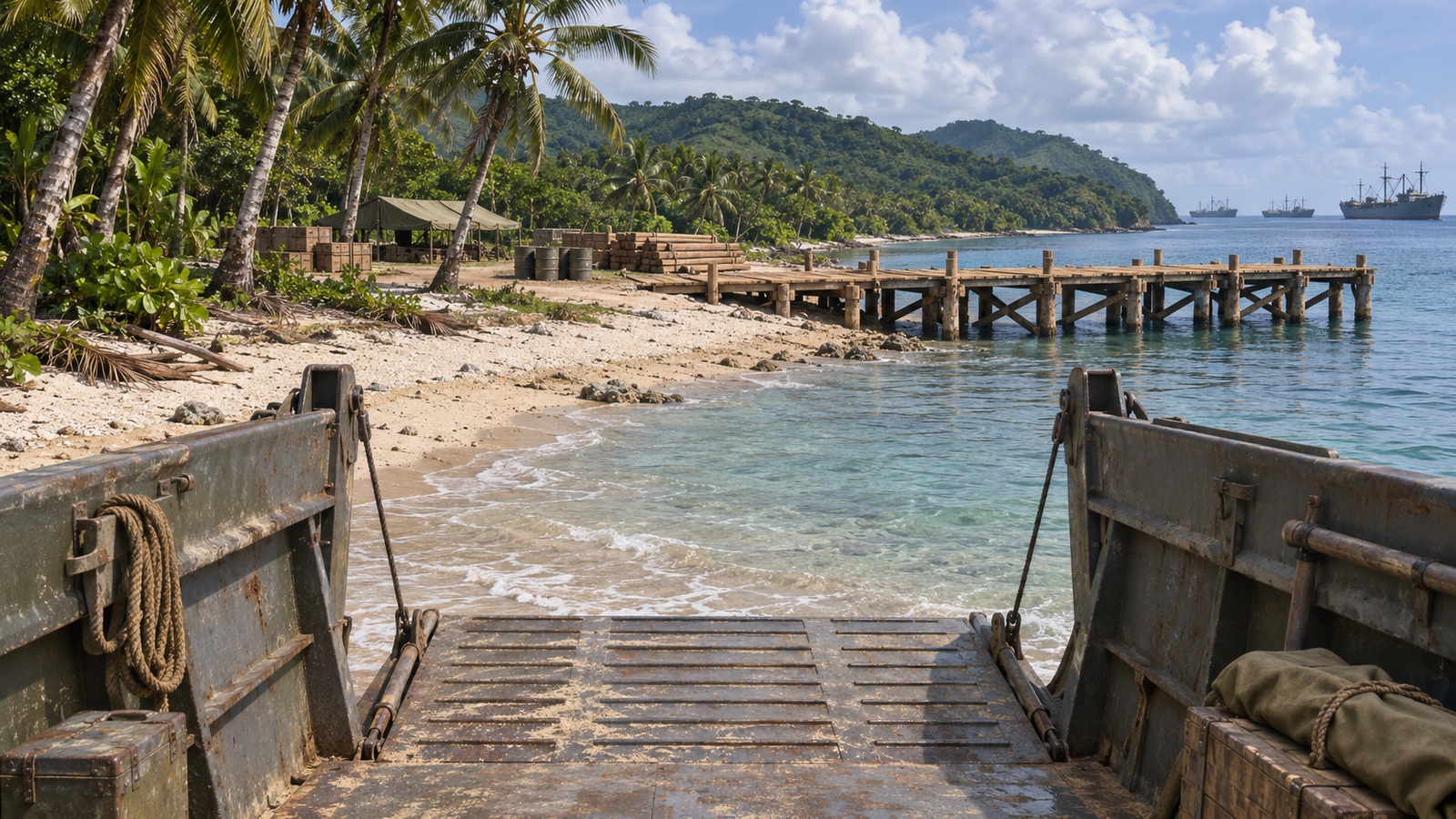
American Marines landed on Guadalcanal on August 7, 1942, and occupied a partly completed airstrip. Engineers brought it into use as Henderson Field. The physical objective explains the connection among land, sea, and air fighting: an airfield needed a defended position ashore, aircraft needed supplies and maintenance, and the people sustaining both depended on transport through contested waters.
The campaign continued into early 1943, when Japanese forces withdrew. Control could not be established by landing once and declaring the island occupied. Reinforcement and supply efforts repeatedly met opposition. The National Archives’ record of Guadalcanal events preserves the developing campaign rather than a single isolated victory. Read after Midway, the example shows what a changed naval balance still required: months of work and combat to keep a new position functioning.
Kokoda Put Land Movement and Human Transport at the Center
Between July and November 1942, Australian forces fought to stop a Japanese advance toward Port Moresby across the Owen Stanley Range. They subsequently pushed the Japanese back, retaking Kokoda on November 2. The objective was not an abstract contest for jungle terrain. It concerned the approach to a significant Allied base in Papua.
The Australian War Memorial’s campaign timeline follows the struggle through particular places, movements, and supply problems. An aircraft could connect distant locations while still being unable to deliver everything to a formation’s immediate position. Men on the ground needed food, ammunition, care, and a means of moving casualties through difficult country.
Papuan carriers and other local people supplied work and knowledge essential to those connections. Their involvement also placed demands on communities living within the campaign area. The case changes an ocean-centered view of the war: ships and aircraft remained important, but the ability to move and care for people over land could shape the practical choices available. Australian military participation and Papuan experience both belong within that explanation.
Rabaul Shows What Bypassing a Position Meant
The Allies did not capture every Japanese-held position in sequence. During 1943, planning around Operation Cartwheel developed toward isolating and bypassing the major base at Rabaul. The U.S. Army’s official history follows the decisions behind that change. A position could lose some of its usefulness if its connections were restricted, even while Japanese personnel remained there.
This was a decision about where to commit resources, not a promise of an easy advance. Other objectives still required fighting, engineering, air support, and transport. MacArthur’s southwest Pacific operations and Nimitz’s central Pacific advance also competed for and shared the wider Allied resources. The phrase island hopping becomes more informative when attached to a named decision such as Rabaul: which position was bypassed, what effect was sought, and where the effort went instead.
Industrial Production Had to Reach the Theater
American industrial capacity became a major advantage as the war continued, but production figures did not turn themselves into effective activity in the Pacific. New ships and aircraft required trained crews, maintenance organizations, replacement supplies, and transportation to the places where they would operate. The ability to connect production with use mattered as much as the existence of a factory.
Experience also needed institutions capable of preserving and applying it. Training, repair practices, medical care, and coordination could improve as organizations learned, while losses and fatigue imposed continuing costs. An explanation that says only that one side produced more equipment leaves out the work through which material resources became sustained military strength. That supporting work connected home-front labor with distant campaigns.
Japan faced a different and increasingly difficult relationship between commitments and available resources as the war progressed. The condition of maritime transport, fuel access, replacement personnel, and industry influenced what its forces could maintain. Those pressures interacted with Allied operations. They should be explained together rather than treated as an entirely separate economic story happening behind the battles.
Leyte Connected an Amphibious Landing With a Fleet Battle
American forces landed on Leyte in the Philippines on October 20, 1944. The Japanese naval response produced the series of engagements known as the Battle of Leyte Gulf from October 23 to 26. The sequence connects a ground objective with a major naval contest. Ships supporting a landing had to be protected while the campaign ashore continued.
Japan suffered another severe naval defeat, but that did not complete the Philippines campaign. Forces ashore still had to operate, local communities remained exposed to violence, and later fighting brought further destruction. The difference matters: weakening an opponent’s fleet changes the wider strategic position without making every defended place immediately accessible. An account that jumps from Leyte Gulf directly to surrender loses those continuing campaigns and their human consequences.
August 1945: Bombings, Soviet Entry, and the Surrender Decision
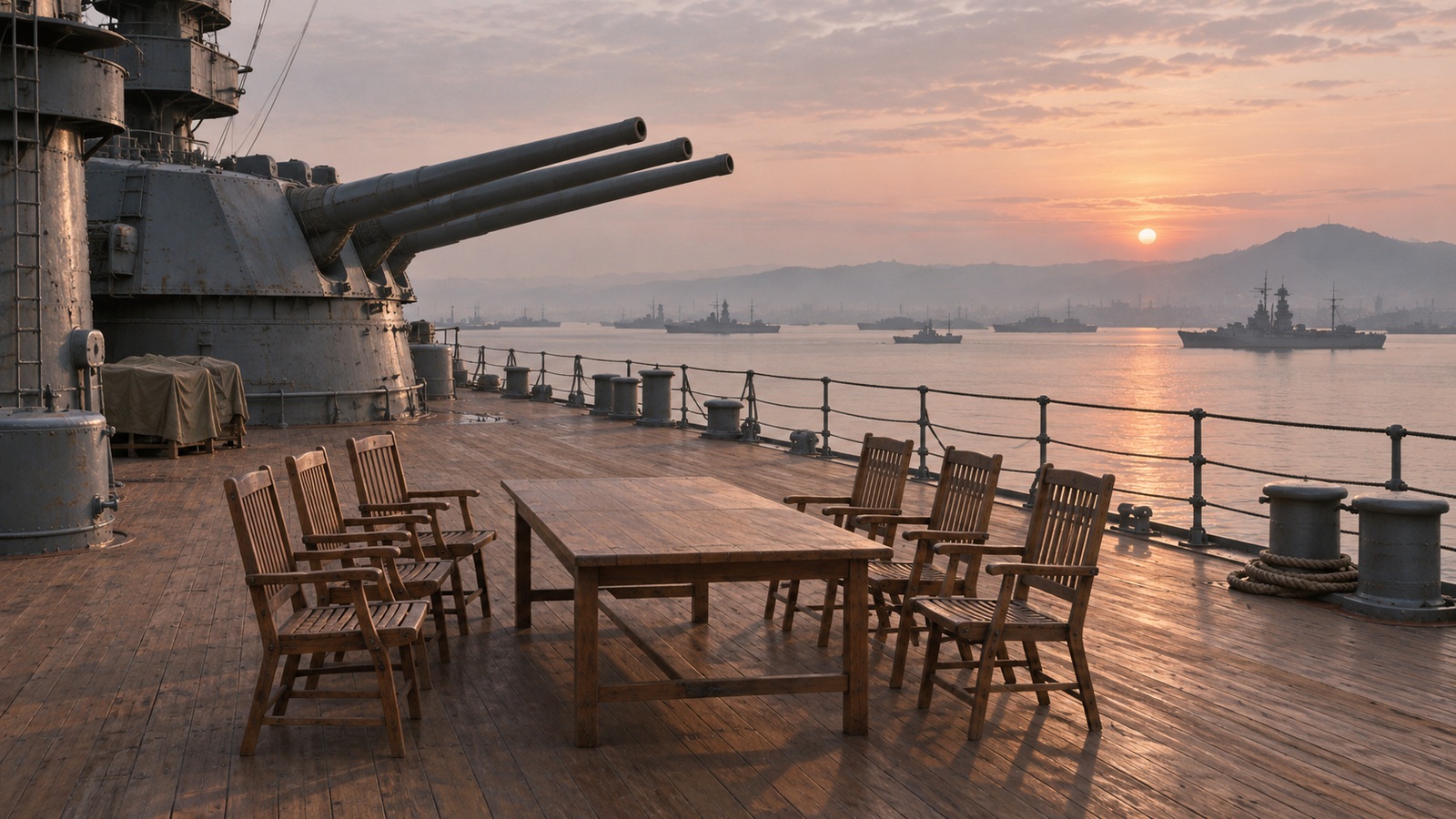
The United States bombed Hiroshima on August 6 and Nagasaki on August 9, with the Soviet Union declaring war on Japan between them on August 8. Japan’s surrender announcement followed in mid-August, while the formal instrument was signed aboard USS Missouri in Tokyo Bay on September 2. Japan’s National Diet Library chronology and the original surrender document establish these separate milestones, whose causal weight remains debated alongside conventional bombing, maritime pressure and decisions within the Japanese leadership. The atomic attacks inflicted extraordinary human suffering, while Soviet entry changed Japan’s international and military position. The announcement communicated the decision to end the war and the signing formally recorded obligations and acceptance, so a single cause or date cannot carry every part of that ending.
Victory Reshaped Political Possibilities Across Asia
Indonesia provides a specific example of the difference between Japan’s defeat and a settled postwar order. Sukarno proclaimed Indonesian independence on August 17, 1945, two days after Japan’s surrender announcement. The Netherlands refused to recognize the declaration and attempted to restore colonial control. A new struggle over political authority followed the military ending of the Pacific War.
The National Archives of Australia records an agreement reached on November 2, 1949, followed by the formal transfer of sovereignty to the Republic of the United States of Indonesia on December 27. The declaration and transfer were different milestones separated by years of conflict and negotiation. Treating independence as a simple consequence delivered by Allied victory would erase Indonesian political action and the Dutch attempt to reoccupy the country. The defeat of one empire did not automatically settle the future of territories previously claimed by another.
The Rijksmuseum’s independence account also describes international support and pressure surrounding the struggle. That connects the aftermath with a wider diplomatic setting rather than presenting it solely as a local change of flag. The case gives the Pacific War’s global impact a concrete meaning: the wartime order ended, but sovereignty still had to be contested and established. Other Asian societies followed different paths, so the Indonesian sequence should be understood as one national transition rather than a regional template.
Use the Named Changes to Follow the Wider War
The examples reveal different mechanisms. Midway removed important carrier capacity. Guadalcanal required sustaining an airfield and defended position. Kokoda connected a base with a difficult land approach. The Rabaul decision redirected effort toward isolation rather than capture. Leyte joined a landing with a fleet response. The 1945 ending combined military shocks with a political decision and formal surrender.
Together, these changes explain why the Pacific War cannot be reduced to a succession of naval victories. China, Papua, occupied societies, and the supporting workforce remain part of the same conflict. The war’s global impact includes the defeat of Japan’s empire and the changed political possibilities facing people across Asia. A coherent history follows those connections through actual events while preserving the different experiences that a single line of island names would hide.